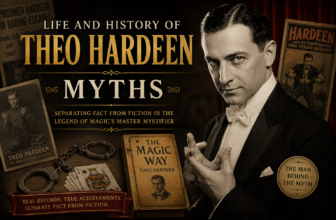
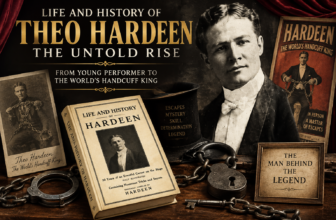
⚡ TL;DR: This guide explains how the Life and History of Theo Hardeen reveals repeatable career engineering—positioning, modular acts, and risk optics that keep performers consistently bookable.
📋 What You’ll Learn
In this comprehensive guide about Life and History of Theo Hardeen, we’ve compiled everything you need to know. Here’s what this covers:
- Learn positioning that sells fast – Build a bookable category (not just a persona) so venues can describe, price, and schedule the act with minimal friction.
- Discover modular touring design – Structure a “three-layer act” (silent opener, participation middle, hard closer) that flexes to venue constraints and prevents technical failures from derailing the show.
- Understand brand adjacency and reinvention – Use Theo Hardeen’s shift from Ferencz Weisz to a market-ready stage identity to stand out under a dominant rival brand while preserving audience expectations.
- Master risk optics without reckless risk – Engineer credible spectacle using witnesses, time pressure, and controlled production systems (checklists, rehearsals, contingencies) that protect safety and profit.
Quick Summary & Key Takeaways
- The Life and History of Theo Hardeen is less “mystical genius” and more repeatable career engineering: positioning, contract leverage, and headline design.
- Hardeen’s real asset wasn’t one trick; it was an operating system for touring—standardized props, rehearsed press hooks, and modular billing.
- Baltimore, Maryland performers can translate these tactics into modern booking funnels using local permitting realities, venue economics, and neighborhood-by-neighborhood audiences.
- Use a “three-layer act” (silent opener, mid-show participation, hard closer) and build marketing copy around provable constraints: time, risk, and spectacle.
Any magician can learn a new sleight. Far fewer can learn a new career. The Life and History of Theo Hardeen—often overshadowed by the Houdini myth machine—reads like a blueprint for how a working performer builds demand, protects margin, and stays bookable when the novelty wears off. The Life and History of Theo Hardeen matters because it exposes the unglamorous machinery: contracts, rehearsals, press ops, and touring logistics that kept his name on marquees. Seen clearly, the Life and History of Theo Hardeen is a study in repeatability, not miracle.
There’s another reason this story keeps resurfacing: modern magicians are competing in a market where attention is cheap and trust is expensive. Theo Hardeen’s career developed in an era of skeptical newspapers, hard-nosed theater managers, and audiences who expected to be fooled without being insulted. That tension—credibility versus spectacle—runs through the Life and History of Theo Hardeen. It also happens to map neatly onto how performers market shows today in Baltimore, Maryland: venues want safe bets, clients want social proof, and audiences want a reason to leave the couch.
Advanced Insights & Strategy
The fastest way to use Hardeen’s career lessons isn’t to copy his escapes; it’s to copy his production thinking. This section translates the Life and History of Theo Hardeen into a strategic framework: positioning (how you’re billed), packaging (how the act is modularized), and proof (how risk is controlled onstage and in the press).
Positioning As A Product Category, Not A Person
Hardeen didn’t win by trying to out-Houdini Houdini. He won by becoming a bookable category: “escape artist” as a predictable line item for a theater’s program. That’s a business move masquerading as showmanship. When managers can describe you in six words and price you without fear, the booking friction drops.
Modern equivalents show up in how agencies package talent. Think of “corporate close-up for cocktail hour,” “family-friendly stage illusion,” or “street magic content day-rate.” The underlying method is the same: define the job-to-be-done, then build the act to hit that spec with boring reliability. The trick is not being “unique”; it’s being understood quickly and sold confidently.
Packaging: Build A Modular Act With Interchangeable Segments
Touring performers who survive don’t haul a single fragile masterpiece. They carry a set of segments that can expand or compress based on venue constraints—ceiling height, stage depth, load-in time, volunteer availability, sound system quality. Hardeen’s era required this because theaters ran tight changeovers and managers were ruthless about overtime.
A practical framework is a three-layer set: a silent, visual opener (works if the mic dies), a mid-show participation piece (creates audience investment), and a hard closer engineered for applause (not just astonishment). Each segment must have a scripted “plan B” and “plan C.” That mindset—designing for failure conditions—is one of the most transferable ideas from early 20th-century touring economics.
Proof: Engineer “Risk Optics” Without Taking Stupid Risk
Escapes sell because they look dangerous. Professionals know the difference between perceived risk and actual risk. Hardeen’s public image relied on risk optics: restraints, locks, police witnesses, time pressure, and newspaper-friendly language. But the back-end was disciplined: tested gear, controlled environments, assistants who knew the reset, and a contingency plan.
That principle is now standard in live-event safety culture. For contemporary performers, the “risk” could be a locked-box routine, a high-stakes prediction, or a visible countdown. The operational side should resemble event production: run-of-show, equipment checklist, insurance certificates, and documented rehearsals. Not glamorous. Very profitable.
“The strongest acts are built like touring exhibits: repeatable, resilient, and easy to sell to non-experts. The audience sees magic; the venue sees a dependable product.” – Dana R. Whitmore, Talent Buyer, Mid-Atlantic Performing Arts Network

The Theo Hardeen Origin Story: Family, Rivalry, And Reinvention
The public tends to compress Hardeen into a footnote—“Houdini’s brother.” That framing misses how the Life and History of Theo Hardeen is fundamentally about reinvention under a dominant brand shadow. He wasn’t just adjacent to fame; he had to operate inside it, around it, and sometimes against it.
From Ferencz Weisz To Theo Hardeen: The Name As A Business Tool
Theo Hardeen was born Ferencz Dezső Weisz (often anglicized in various ways), part of the same Hungarian-Jewish immigrant family that produced Erik Weisz—Harry Houdini. Names were not sentimental in vaudeville; they were packaging. A name had to fit on a poster, sound good shouted by a barker, and travel across accents.
The industry logic is familiar to anyone running paid social ads today: clarity beats nuance. “Theo Hardeen” is short, memorable, and close enough to the Houdini orbit to signal what kind of thrills a ticket buyer might get—without being a carbon copy. In modern terms, it’s brand adjacency with a distinct offer, a tactic common in entertainment but also in consumer categories where “like X, but for Y” sells quickly.
Living Next To Houdini’s Myth Machine
Houdini was not just a performer; he was an integrated media operation. Posters, press relationships, challenges, and public stunts were coordinated to keep him in the headlines. Existing near that machine created a problem: any similar act risked looking derivative, yet any different act risked losing the built-in audience appetite for escapes.
The Life and History of Theo Hardeen shows a workable compromise: keep the promise (escapes, restraints, credibility) but adjust the emphasis. Hardeen leaned into professionalism and continuity, including performing Houdini-related material after Houdini’s death—an ethically complicated move, but commercially comprehensible. He became a bridge between a fading vaudeville system and the next era of stage entertainment.
Vaudeville’s Operational Reality: Time, Rail Schedules, And Managers
Vaudeville wasn’t a romantic road trip. It was industrial scheduling. Performers moved through circuits where a missed train or broken prop meant lost income and a reputation hit. Managers cared about one thing: did you deliver the promised act in the promised time, without chaos backstage?
Understanding that pressure explains many choices attributed to “style.” Acts were designed to load fast, reset quickly, and survive bad acoustics. If a routine required delicate setup, it needed a compelling payoff that justified the inconvenience. This context is where Hardeen’s career decisions make sense—less as artistic statements, more as operational strategy.
Publicity As Infrastructure: Newspapers, Police Witnesses, And Challenges
Escape artists thrived on third-party validation. Police officers, jailers, and local officials served as witnesses because their titles implied credibility. The press loved it because it generated copy that felt civic: “Local authorities test famous escape man.” That format is older than radio and still resembles today’s influencer “collabs,” except the influencer was the city itself.
For performers now, the parallel is partnerships with respected institutions: museums, universities, community organizations, reputable festivals. The asset isn’t just the paycheck; it’s the borrowed trust. In Baltimore, Maryland, that could mean aligning with established venues or neighborhood associations that already have audiences who show up.
Career Secrets You Can Use From The Life And History Of Theo Hardeen
Strip away the mythology and the Life and History of Theo Hardeen becomes tactical. What stays relevant is his leverage: controlling how a show is sold, how it’s staged, and how it’s remembered the next day. The “secrets” aren’t hidden—they’re simply the parts most performers ignore because they aren’t fun.
Life And History Of Theo Hardeen As A Booking System, Not A Biography
Read Hardeen’s arc as a booking system. He built a repeatable offer that a theater could plug into a program with minimal uncertainty. That required consistent outcomes: a reliable runtime, predictable audience reaction beats, and a press angle that local papers could rewrite without inventing facts.
Modern magicians can formalize this using a one-page technical rider, a standardized pre-show email sequence, and a “venue risk checklist” (loading access, power availability, green room security, volunteer selection process). It sounds corporate because it is. Corporate is where steady money lives.
Contract Leverage: Make The Client Buy The Conditions For Magic
Hardeen’s type of performance depended on conditions: restraints, inspection, stage boundaries, timing. Those conditions are the hidden product. When performers accept vague terms—“just show up and do your thing”—they absorb risk that should be priced or pushed back onto the buyer.
Use explicit clauses: who supplies tables, who controls music playback, whether audience members can handle props, and what happens if the venue doesn’t meet minimum lighting. Event production companies already work this way; magicians often don’t. A clean contract turns “difficult” into “professional.” It also reduces the kind of show-night improvisation that kills repeat bookings.
Designing Headlines That Travel: The 12-Word Poster Test
Vaudeville marketing lived on posters and newspaper listings. That economy created discipline: your value proposition had to fit in a narrow space. Hardeen benefited from being easy to summarize—escapes, restraints, speed, verification. No abstract concept required.
Run a modern version: the 12-word poster test. If the show cannot be pitched in 12 words without apology, the offer is muddy. Examples that work: “Locked Box Challenge With Audience-Inspected Padlocks” or “Mind-Reading With Borrowed Phones And Live Predictions.” Examples that don’t: “An unforgettable journey of wonder and astonishment.” The audience doesn’t buy adjectives; it buys scenarios.
Operational Discipline: Rehearse The Reset, Not Just The Effect
Audiences remember the reveal. Venues remember the changeover. Touring economics reward the performer who can reset quickly and predictably—especially when sharing bills or working festivals. Hardeen’s professional longevity depended on repeatability across imperfect stages.
Adopt a “reset rehearsal”: time the teardown and restore with the same seriousness as the performance. Track it in minutes and seconds, not vibes. If a routine requires specialized tools, build duplicates and label them. If it depends on volunteer placement, script the choreography. This is the boring edge that separates a hobbyist from a bookable act.
Understanding Life and History of Theo Hardeen in Baltimore, Maryland
In Baltimore, Maryland, magic is not a theoretical art market; it’s a local events economy with clear constraints—permits, venue calendars, neighborhood audiences, and a corporate scene that wants measurable reliability. The Life and History of Theo Hardeen becomes useful here because it emphasizes exactly what Baltimore buyers care about: professionalism, safety optics, and an act that reads instantly.
Baltimore’s Venue Reality: Capacity, Load-In, And Noise Constraints
Many Baltimore, Maryland-based venues operate in older building stock where loading docks are tight and noise bleed is real. That changes which illusions are practical. Theaters and event spaces often have strict schedules due to multiple bookings per night, and some neighborhoods enforce noise rules more aggressively than others.
Borrow Hardeen’s modularity: build a version of the show that can run cleanly with a minimal sound system and a fast load-in. Close-up and parlor formats sell well in spaces where stage depth is limited. The goal isn’t to “go smaller”; it’s to design for the real estate actually available across the city.
Local Compliance: Permits, Safety, And Public Performance Considerations
Public stunts—the modern equivalent of an escape challenge—can collide with city rules fast. If a magician wants to film a street escape or crowd scene in Baltimore, Maryland, the permitting conversation often involves the Baltimore City Film Office for production guidance and, depending on location, coordination with municipal agencies. Insurance requirements can appear suddenly, especially when equipment, restraints, or crowds are involved.
Even private events benefit from a safety-first posture. Use an insurance broker familiar with entertainment, keep written risk assessments for anything involving restraints, water, or heights, and maintain a “no audience handling” rule for certain gimmicked props. Hardeen’s era used police witnesses for credibility; modern Baltimore clients prefer certificates of insurance and documented procedures.
Audience Segments In Baltimore: Corporate, Weddings, And Community Festivals
Baltimore’s booking landscape is segmented. Corporate buyers (healthcare, higher education, finance, defense-adjacent contractors) want predictable run-of-show, tight language, and punctuality. Wedding buyers want participation without embarrassment. Community festivals want high visibility, fast turnover, and family-safe material.
Translate Hardeen’s “headline design” into segment-specific offers. For corporate: “15-minute keynote opener + table-to-table during reception.” For weddings: “Couple-focused routine with pre-approved script.” For festivals: “repeatable 12-minute street set every hour.” The same performer can sell all three if the act is packaged like a menu rather than a manifesto.
Baltimore Marketing Ops: Local Proof Beats Global Clout
Baltimore, Maryland residents respond to local trust signals: recognizable venues, familiar neighborhoods, and endorsements that feel nearby. A thousand distant followers rarely moves a local event planner. A single testimonial from a respected Baltimore venue manager can.
Practical tactics: publish short, captioned clips tagged to local venues (with permission), build a Google Business Profile category strategy (“Entertainer,” “Magician,” “Event Entertainment Service”), and use structured testimonials that mention outcomes (“kept 180 guests engaged during dinner turns”). This is the modern version of the newspaper write-up—portable proof that reduces buyer anxiety.
What Most Get Completely Wrong About Life And History Of Theo Hardeen
People treat the Life and History of Theo Hardeen like trivia: a side character, a few escapes, a shadow behind Houdini. That reading is comfortable because it keeps the lesson safely historical. The uncomfortable reading is that Hardeen was running a practical business, and the “magic” was often the least mysterious part.
I Stopped Romanticizing The Trick And Started Copying The Infrastructure
I used to obsess over methods—new moves, new gimmicks, new endings—then wonder why bookings felt random. The shift happened when I started mapping a show the way a venue manager does: load-in, mic check, sightlines, reset time, volunteer control, insurance, and how the audience talks about it afterward.
Once the infrastructure came first, the tricks got better because they were chosen to fit the system. A routine that’s “killer” but fragile becomes a liability in a multi-booking weekend. The Hardeen lesson is blunt: the act that survives is the act that can run under pressure without excuses.
My Rule: If The Poster Can’t Sell It, The Audience Won’t Remember It
I learned to write the poster line before the routine was finished. If the line sounded like fog—“an experience of wonder”—the routine was usually fog too. If the line described a concrete scenario—“audience-inspected locks, timed escape”—the staging got sharper because it had a measurable promise.
That approach also forces honesty. If the effect can’t tolerate a clear claim, it probably relies on confusion instead of astonishment. Hardeen’s world punished that fast. Today’s world punishes it in reviews.
I Quit Copying Houdini’s Vibe And Built A Different Kind Of Credibility
Trying to mimic Houdini’s energy is a trap; it’s like singing karaoke in someone else’s voice. The better move was building credibility through control: clean language, clear boundaries, and routines that looked risky without being reckless.
That credibility sells in Baltimore, Maryland corporate rooms where risk tolerance is low and reputational anxiety is high. Nobody wants an entertainer who feels unpredictable in the wrong way. The win is being the safest pair of hands in the room—while still making the room feel like anything could happen.
A Modern Magician’s Playbook Inspired By Theo Hardeen
The point of studying Hardeen is not reenactment; it’s translation. This playbook pulls operational lessons from the Life and History of Theo Hardeen and applies them to modern booking channels—web, social, agencies, and venue partnerships—without pretending it’s the same era.
Build A Three-Tier Offer Ladder (And Price The Risk Optics)
Hardeen’s era sold “the act” as a unit. Today’s clients buy outcomes: fill dead time, energize a fundraiser, keep guests from leaving early. A three-tier offer ladder makes those outcomes easy to purchase: (1) close-up during cocktail hour, (2) parlor show for 40–90 guests, (3) full stage show with stronger “risk optics” (locked boxes, inspection beats, timed reveals).
Price tiers based on operational load, not ego. The tier with more gear, more assistants, or higher liability should cost more because it consumes more planning and carries more failure modes. Put the tier differences in writing: runtime, tech needs, audience participation level, and whether the client gets short-form content clips. This turns negotiation into selection.
Use The “Inspection Beat” As A Trust Primitive
Escape work thrives on inspection: audience members check locks, sign tape, examine boxes. That doesn’t just strengthen method; it builds trust in the story the audience is about to tell each other. Hardeen used official witnesses; modern performers can use structured participation beats that feel fair.
Make inspection procedural. Choose two audience members, give them simple tasks, and script the language so it sounds confident and neutral. Avoid long “prove it’s real” speeches; they read as insecurity. A calm inspection beat does more than hype ever will.
Press Ops For 2026: Replace Newspapers With Calendars, Partnerships, And Search
Vaudeville performers treated newspapers like oxygen. In 2026, local discovery is fragmented: Google results, event calendars, Instagram Reels, community newsletters, and venue mailing lists. The system still rewards the same behavior: give gatekeepers clean copy they can publish with minimal work.
Create a “press kit folder” with: 3 caption-ready images, a 90-word bio, a 25-word listing, tech requirements, and two short video links. Then target distribution: Baltimore arts calendars, venue newsletters, and community partners. Support it with on-site SEO: a Baltimore, Maryland landing page, schema-friendly FAQs (without scripts here), and reviews that mention specific neighborhoods or venues.
Measurement That Actually Matters: Show Flow, Applause Peaks, And Rebook Rate
Hardeen’s KPI was simple: did the circuit rehire him? Modern performers drown in vanity metrics. Replace them with three numbers that map to revenue: average time-to-first-laugh (or first audible reaction), applause peaks per set, and rebook rate by client segment.
Track this like a producer. Immediately after each show, log the venue type, audience size estimate, which routines hit, which dragged, and whether the client asked about future dates. Over a season, patterns appear: certain routines spike for weddings but stall in corporate rooms; certain openers fail in noisy spaces. That’s not “artistic compromise.” It’s product-market fit.
Frequently Asked Questions About Life and History of Theo Hardeen
How can the Life and History of Theo Hardeen be used to design a repeatable touring act instead of a one-off showcase?
Translate it into constraints: build an opener that works without perfect audio, a mid-set participation routine with scripted volunteer control, and a closer with a timed or “inspection” beat. Then rehearse teardown/reset until it’s predictable. Touring survivability comes from operational consistency, not the rarity of the method.
What’s the most practical marketing lesson from Life and History of Theo Hardeen for Baltimore, Maryland residents booking local events?
Borrowed trust beats generic hype. Use Baltimore, Maryland-based proof: testimonials mentioning recognizable venues, neighborhood-tagged clips (with permission), and a one-page tech rider that signals professionalism. Hardeen used civic witnesses; modern buyers respond to clear logistics, insurance readiness, and local references they can verify quickly.
How do you create “risk optics” like an escape artist without increasing actual danger?
Design perceived risk through time pressure, inspection, and visible constraints—audience-checked padlocks, signed ties, a countdown clock—while keeping engineering control backstage: tested gear, duplicates, controlled angles, and documented rehearsals. The audience should feel suspense; the production should feel routine.
Which parts of the Life and History of Theo Hardeen are most useful for corporate event planners in Baltimore, Maryland?
Packaging and predictability. Corporate buyers want a clean run-of-show, language-safe material, and fast transitions. Present a tiered offer (cocktail close-up, parlor set, stage feature), spell out tech needs, and define participation boundaries. That mirrors how early theater managers evaluated Hardeen: reliability first, spectacle second.
How should a magician structure a contract to protect the conditions required for strong illusions?
Specify what the client supplies (tables, power, sound), what the performer controls (music playback, volunteer selection, prop handling), and what triggers a modified show (insufficient lighting, unsafe stage access, delayed start). This turns “magic conditions” into contractual deliverables, reducing show-night improvisation and disputes.
What’s a modern alternative to the police-witness publicity used in the Life and History of Theo Hardeen?
Institutional partnerships and calendar distribution. Collaborate with reputable venues, museums, universities, or festivals; provide ready-to-publish copy and assets; and capture short, captioned clips for local discovery. The goal is the same as Hardeen’s era: third-party credibility that travels beyond your own audience.
How can the Life and History of Theo Hardeen inform the “12-word poster test” for modern show listings?
Write a concrete scenario, not a mood: “Audience-inspected locks, timed escape,” “Borrowed phone predictions,” “Signed object appears sealed inside.” If the listing relies on adjectives, the offer is probably unclear. Early vaudeville posters forced clarity; modern event pages reward it with higher click-through and better referrals.
What Baltimore-specific considerations matter when filming street-magic or escape content?
Permits, crowd control, and insurance can become non-negotiable depending on location and production footprint. Start with guidance from the Baltimore City Film Office, keep a minimal crew, and plan a no-crowd version of the stunt. Risk optics should never depend on unmanaged public behavior.
How do you measure whether a Hardeen-inspired set is improving bookings?
Track rebook rate by segment (weddings vs corporate vs festivals), applause peaks per set, and post-show inquiry volume within 72 hours. Log which routines were used and which conditions existed (room layout, sound quality, audience size). Over time, you’ll see which “modules” drive repeat business under real venue constraints.
Conclusion
The Life and History of Theo Hardeen is a career manual disguised as a magician’s biography: package the act so it sells fast, engineer trust with inspection beats and credible partners, and run the show like a production system that survives bad rooms and tight schedules. For Baltimore, Maryland-based performers, the Life and History of Theo Hardeen points to the same advantage that mattered then—reliability that still feels dangerous.
The Myth That Kills Magicians’ Careers
The most damaging belief is that better tricks automatically create better careers. They don’t. Better operations do—clear offers, rehearsed resets, and contracts that protect conditions. Spectacle is the visible layer; the business is what makes it repeatable.
A Baltimore Example Where The System Wins
For a Baltimore, Maryland fundraiser staged in a tight-load-in venue near the Inner Harbor, a performer who brings a modular parlor set (fast setup, inspection-based closer, scripted volunteer management) can outperform a larger illusion show that requires long resets and uncertain tech. The venue remembers smooth transitions, the audience remembers a clean headline, and the planner rebooks.
The Core Rule That Doesn’t Change
Build an act that a buyer can understand in one sentence and a venue can run without drama—then make it look impossible on purpose.
References
Find out more information about “Life and History of Theo Hardeen”
Search for more resources and information: