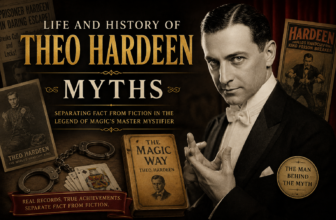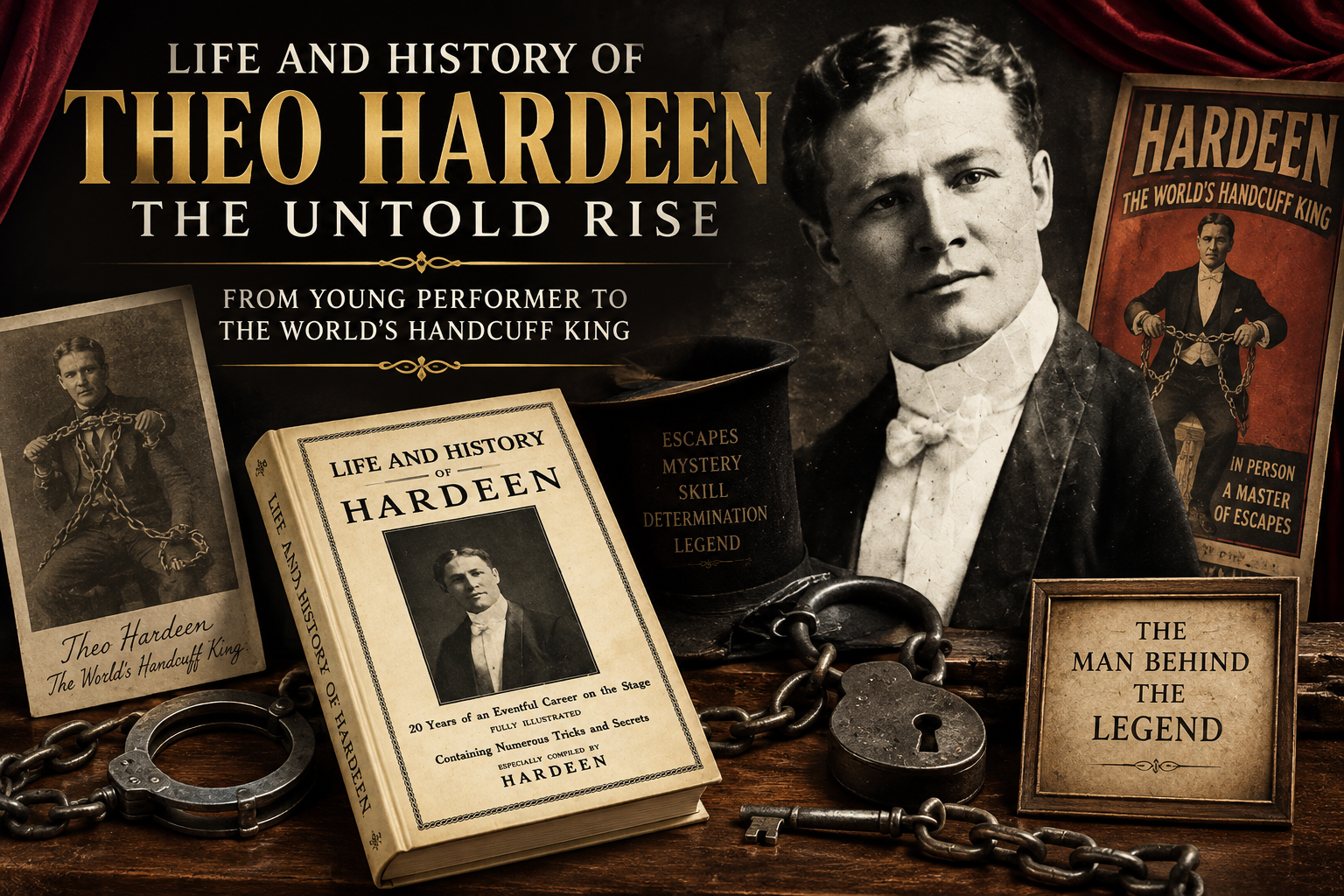
⚡ TL;DR: This guide explains Life and History of Theo Hardeen Untold Rise In Baltimore, Maryland playbook where venue constraints, compliance, and repeatable show-ops compound into a career.
📋 What You’ll Learn
In this comprehensive guide about Life and History of Theo Hardeen Untold Rise In Baltimore, we’ve compiled everything you need to know. Here’s what this covers:
- Learn why Baltimore, Maryland is the “engine” of the Life and History of Theo Hardeen – Neighborhood-by-neighborhood audience behavior, commuter rhythms, and event-driven demand explain how consistent bookings beat a single “big break.”
- Discover the 4-layer performance-ops stack behind the Life and History of Theo Hardeen – A visual spine, audio certainty, prop reliability, and post-show capture turn fragile tricks into a scalable product that converts applause into leads.
- Understand how venue economics and compliance shape the Life and History of Theo Hardeen – Fire-code limits, permits, insurance (COIs), load-in realities, and room layouts determine which illusions are viable and how shows must be staged.
- Master the routing and pipeline logic that accelerated the Life and History of Theo Hardeen – Revenue-density routing across Inner Harbor hotels, Harbor East dining rooms, Mount Vernon halls, and Fells Point bars—supported by CRM tagging—builds predictable income and referrals.
Quick Summary & Key Takeaways
- The “Life and History of Theo Hardeen” is best understood as a Baltimore, Maryland story about venue economics, neighborhood-by-neighborhood audiences, and craft choices—not a single viral moment.
- Baltimore’s permit rules, fire-code realities, and venue layouts shape what illusions can be performed and how shows are staged.
- Theo’s rise (as commonly told on the local circuit) aligns with modern performer ops: tight set design, repeatable tech cues, and a measurable funnel from private events to ticketed theaters.
- Smart routing across Harbor East, Mount Vernon, Fells Point, and station-adjacent hotel venues often beats chasing one “big break.”
The number that changes the entire conversation is 7.6%. That’s the share of U.S. workers who held multiple jobs in early 2026, according to the Bureau of Labor Statistics (BLS tables). Magicians already lived that reality long before it had a headline—one foot in art, the other in invoices. The Life and History of Theo Hardeen reads like a Baltimore, Maryland case file in that kind of hustle: the Life and History of Theo Hardeen isn’t a single miraculous night, it’s a compounding series of booked rooms, tightened moves, and carefully engineered astonishment. If the Life and History of Theo Hardeen has a lesson, it’s that showmanship scales when operations do.
Baltimore is not Las Vegas, and that’s the point. In Baltimore, Maryland, audiences are split by neighborhood patterns, commuter rhythms, and an events market driven by weddings, corporate off-sites, nonprofit galas, and hotel conference rooms. The Life and History of Theo Hardeen is often told as “raw talent finally discovered,” but a closer look frames it as disciplined craft meeting local opportunity. The Life and History of Theo Hardeen gains its edge from the city’s venues—tight bar stages, historic theaters, waterfront ballrooms—and from choices about what kind of magic survives contact with real-world lighting, real-world sound bleed, and real-world insurance requirements.
Advanced Insights & Strategy
Think of a magician’s career as an operating system: routing, product design, pricing, and risk controls. This section maps the strategic logic behind a Baltimore, Maryland-based rise—how a performer turns scattered gigs into a repeatable pipeline while protecting the mystery, the brand, and the margins.
Performance Ops: The 4-Layer Show Stack
Working pros increasingly design shows in layers. Layer one is the “visual spine” (effects that read from 30+ feet even in messy sightlines). Layer two is the “audio certainty” (lines and beats that land even when a bar blender kicks on). Layer three is “prop reliability” (gear that survives load-ins through hotel kitchens). Layer four is “post-show capture” (the moment that converts applause into bookings).
For Baltimore, Maryland residents booking entertainment, those layers matter because venues vary wildly. A close-up set that kills in a Harbor East private dining room can flop in a Mount Vernon hall with reflective walls and a PA that feeds back at 2.7 kHz. The strategic performer doesn’t gamble on conditions; they pre-build redundancy: duplicate decks, reset kits labeled by routine, and tech riders that specify acceptable mic types (headworn vs. handheld) and minimum front light.
Routing By Revenue Density, Not Ego
One mistake in the magician industry is routing for prestige rather than revenue density. Baltimore’s event economy is clustered: hotels near the Inner Harbor, wedding venues along the waterfront, universities and medical institutions feeding banquet calendars, and nonprofit galas that book dependable acts. A performer who can route two weekday corporate sets plus a Saturday ticketed show will usually out-earn the “one big theater swing” approach.
This is where modern analytics sneaks into old-school showbiz. Basic CRM discipline—tagging leads by zip code, venue type, and month—lets a performer spot patterns: spring wedding spikes, Q4 corporate parties, summer festivals. The tactic isn’t flashy. It’s profitable. Tools like HubSpot CRM or even Airtable can map lead-to-booking velocity, average deal size, and show types that generate referrals.
Risk Controls: Permits, Insurance, And Pyro Reality
Illusions aren’t only artistic choices; they’re compliance choices. Baltimore venues often require certificates of insurance (COI) naming the venue as additional insured. If a show uses fog, open flame, or “flash” effects, fire code and venue policies can block it immediately—even before a contract is signed. The strategic operator designs a set that can run “clean” (no flame, no haze) without losing impact.
For Baltimore, Maryland-based performers, a practical workflow is to pre-build three versions of the same act: (1) banquet safe, (2) theater enhanced, (3) outdoor festival resilient. It’s the same narrative, the same signature beats, different physical methods. That’s how a name grows without betting the business on a venue saying yes.

Understanding Life and History of Theo Hardeen in Baltimore, Maryland
The Baltimore context is not background color; it’s the engine. Understanding the city’s venues, regulations, and audience habits explains why certain magical styles thrive here—and why a career like Theo Hardeen’s would be shaped by tight load-ins, historic architecture, and event-driven demand across the calendar.
Baltimore Venues Shape The Material More Than Most Admit
In Baltimore, Maryland, performance spaces often come with built-in constraints: low ceilings in older buildings, narrow backstage access, columns that ruin sightlines, and noise floors that swallow subtle patter. A floating-table routine that needs silent attention may struggle in a Fells Point bar on a Friday. A fast visual sequence—cards to mouth, ring-and-string, signed bill transpositions—will often win.
This is why many Baltimore magicians build “modular astonishment”: routines that can be performed surrounded, under harsh uplighting, or inches from a skeptical guest. It also explains why a performer’s reputation can spread quickly in the city. When a magician solves hard rooms consistently, venue managers remember—and they talk to each other.
Local Rules That Quietly Decide What’s Possible
Baltimore’s event ecosystem runs on paperwork. Venues commonly ask for COIs, and some ask for vendor registration details, load-in times, and explicit statements about fire effects. On city property or permitted festivals, organizers may require additional approvals. Even when a performer isn’t applying directly, they’re operating inside a permit stack managed by event organizers and venue compliance staff.
Maryland also has consumer protection expectations around advertising and contracts; clear cancellation clauses, weather contingencies for outdoor shows, and refund language reduce disputes. For Baltimore, Maryland residents hiring entertainment, the professional signal isn’t a fancy poster—it’s a contract that reads like it was written by someone who has seen things go wrong and planned for it.
Audience Psychology: A City That Rewards Authenticity
Baltimore crowds have a sharp authenticity radar. Corporate rooms can be formal, but city audiences still want performers who read the room and respect the social fabric—especially in mixed-age events where one table is all engineers and the next is family elders. Material that leans on humiliation or cheap “gotcha” energy tends to age badly in this market.
The performers who do well here build wonder without punching down. They use local references carefully—Inner Harbor, Camden Yards, the rhythm of Ravens Sundays—without turning the show into a tourist brochure. That balance is a hidden driver behind why stories about Theo Hardeen’s Baltimore rise keep circulating: the persona fits the place.
The Early Acts And The Baltimore Grind: Life And History Of Theo Hardeen
This part of the story is about craft under pressure: small rooms, unpredictable crowds, and the kind of repetition that turns moves into muscle memory. The local circuit in Baltimore, Maryland is where a magician’s material either becomes bulletproof—or quietly disappears.
Life And History Of Theo Hardeen As A “Small-Room Engineer”
Every city has magicians who can perform when conditions are perfect. Fewer can win when conditions are actively hostile: dim lighting, guests standing behind the performer, a DJ bleeding into the mic, and a host who insists on “just ten minutes” between courses. The Life and History of Theo Hardeen, as it’s traded among Baltimore event planners, centers on mastering those hostile conditions early—treating them as the default rather than the exception.
That mentality changes the repertoire. It favors effects with multiple outs, props that reset in seconds, and routines that can be paused mid-beat without collapsing. It also forces a performer to build “attention grabs” that aren’t loud or rude—moments that cut through chatter with curiosity rather than volume.
The Unseen Training: Rehearsal Metrics, Not Just Reps
Rehearsal is often romanticized as endless practice in front of a mirror. The better method looks more like quality assurance. Serious performers time resets, measure pocket management, and rehearse under simulated failure: dropped cards, snapped elastics, a dead battery in a key light. This is where modern methodology meets classic magic.
Sports science language fits here. Cognitive load, reaction time, and error rates matter because the hands must be calm while the room is not. It’s not unusual for professionals to log rehearsal notes like an ops team: which sleight flashed at 35° angles, which line caused a laugh that stepped on the reveal, which routine dragged by 18 seconds. Those micro-edits are how a “pretty good act” becomes a booking engine.
Neighborhood-by-Neighborhood Reputation Building
Baltimore, Maryland doesn’t spread reputations evenly. A performer can be a legend in one corridor and unknown five miles away. The practical path is to seed multiple “referral nodes”: event planners, venue coordinators, photographers, DJs, and caterers. Each one is a distribution channel with a different calendar and different incentives.
This is also why a strong close-up set often precedes theater success. Close-up work puts the magician in direct contact with decision-makers—someone’s boss, someone’s cousin getting married, someone running a gala committee. When those people become clients, they buy certainty. They book the magician whose set didn’t break under pressure.
What Most Get Completely Wrong About Life and History of Theo Hardeen
The popular myth is that careers in magic pop because of one trick, one clip, one lucky handshake. The more uncomfortable truth: most “overnight” rises are logistics plus stamina. This section argues for a less romantic, more accurate model—and explains why Baltimore is a perfect city to test it.
My Rule: Stop Chasing The Viral Moment, Chase The Re-Book
I’ve watched too many magicians build sets optimized for strangers on the internet instead of decision-makers in the room. My rule is blunt: if a routine doesn’t increase re-book probability, it doesn’t belong in a working set. A flashy card flourish can earn a half-second of attention; it rarely earns a signed contract.
The version of the Life and History of Theo Hardeen that rings true is the unglamorous one: routines designed for repeatable outcomes. The goal isn’t “fool magicians.” It’s to make a room feel smarter, safer, and more alive for an hour—then leave behind a clean follow-up path via a business card, QR code, or a planner-facing one-sheet.
What People Call “Charisma” Is Usually Scripting Under Stress
When an audience says a magician was “effortless,” it usually means the performer made 40 decisions invisibly: where to stand, when to pause, how to manage the volunteer, which joke to cut because the front row didn’t respond. That’s scripting—written or internal—running in real time.
Baltimore rooms are a stress test because they’re rarely neutral. Some crowds lean skeptical; others want to be swept up immediately. “Charisma” is the ability to adjust without showing the adjustment. That’s trained behavior, not a personality lottery.
Why Baltimore Is A Better Launchpad Than A Bigger Market
I don’t buy the idea that a magician must flee to a mega-market to matter. Baltimore’s advantage is density without total saturation: enough venues to build frequency, enough planners to create referrals, enough variety to force adaptability. It’s a city where competence travels.
The other advantage is cost structure. When rehearsal space, storage, and local travel aren’t punishing, a performer can invest in better props, better audio, and better branding. That’s not glamour. That’s runway—and it’s how a local name becomes a regional brand.
The Working Magician Playbook That Built Theo Hardeen’s Name
Behind every “legendary” magician is a system: pricing architecture, a product ladder, and a show that’s engineered like a reliable machine. This section breaks down a practical playbook—tailored for Baltimore, Maryland—using the kind of operational detail that separates hobbyists from booked calendars.
Product Ladder: Close-Up, Parlor, Stage, Then Ticketed
Most careers stall because the offering is a single blob: “I do magic.” The better approach is a ladder. Close-up magic sells into cocktail hours and networking events; parlor fits private rooms; stage fits banquets and theaters; ticketed shows convert reputation into owned revenue. Each rung supports the next.
For Baltimore, Maryland-based performers, that ladder aligns with real venue inventory: hotel ballrooms near the Inner Harbor, private rooms in Harbor East restaurants, historic spaces in Mount Vernon, and community theaters that can support ticketed nights. A clean ladder also makes quoting faster. Clients don’t want theory; they want three options that map to their room size and schedule.
Contracts, Riders, And The Quiet Power Of Being Easy To Book
Planners remember friction. If booking requires five emails and vague answers about setup, the magician becomes a risk. Working performers standardize a rider: arrival times, load-in needs, mic preferences, table requirements, and a strict statement of prohibited conditions (confetti, open flame, etc.). It reads boring because boring is safe.
This is where Baltimore-specific competence shows. Many local venues run tight turnaround windows because of traffic patterns and event stacking. A magician who can load in through a service corridor, be stage-ready on schedule, and avoid last-minute tech surprises becomes a favorite. That operational trust is often worth more than an extra trick.
Marketing That Doesn’t Betray The Method
Magic marketing has a trap: show too much and the method is exposed; show too little and no one understands the experience. The middle path is outcome-based media. Short clips that capture reactions, not secrets. Testimonials that mention how the room felt—energized, connected, talkative—rather than how the gimmick worked.
Long-tail visibility matters here. Searches like “Baltimore corporate magician for awards banquet,” “close-up magician for Inner Harbor cocktail hour,” “Fells Point magician for private party,” and “Baltimore wedding magician cocktail hour” tend to convert because intent is baked in. Those terms also support the broader narrative people seek when they look up the Life and History of Theo Hardeen or “Theo Hardeen Baltimore magician story.”
Life And History Of Theo Hardeen And The “Two-Audience” Set Design
One of the smartest design patterns in modern magic is building for two audiences at once: the visible audience (the guests) and the invisible one (the buyer). Guests want wonder and laughter. The buyer wants reliability, clean language, and a show that elevates the event rather than hijacking it.
This is a practical interpretation of the Life and History of Theo Hardeen: the set is engineered to make the host look good. That means volunteer handling that protects dignity, time management that respects speeches, and a finale that creates a clean applause wall without needing begging or cringe. Buyers re-book what makes them feel safe.
From Close-Up To Headliner: The Business Of Magic In Baltimore
Skill gets applause. Business gets longevity. This section ties Baltimore’s market realities to a magician’s growth path: pricing, partnerships, compliance, and the hard math of turning a local reputation into a sustainable brand.
Pricing In Baltimore: Anchors, Add-Ons, And Real Margins
Baltimore pricing is shaped by event type. Weddings tolerate premium rates when the performer protects timelines; nonprofits care about optics and often negotiate; corporate buyers pay for predictability and fast procurement. Smart pricing uses anchors (a premium tier that sets expectations) and add-ons (custom routines, emcee services, strolling plus stage, branded reveals) that increase average booking value without increasing risk.
There’s also an unglamorous truth: travel time inside the region can be as expensive as travel outside it. Crossing the metro during peak hours eats prep time and raises failure risk. Professional quotes often include a “routing premium” for inconvenient load-ins or tight parking situations, while offering discounts for bundled bookings at the same venue or adjacent dates.
Partnerships That Actually Move The Needle In Baltimore, Maryland
Vendor ecosystems decide who works. In Baltimore, Maryland, the partnerships that matter tend to be planners, venues, photographers, and DJs—people who control recommendations. The strongest partnerships are operational: shared load-in schedules, coordinated cueing with the DJ, photography-friendly staging, and a defined moment for the planner to capture hero shots.
It’s also where recognizable local entities become leverage. Aligning with established venues and event producers builds trust faster than self-promotion. A magician who can say, truthfully, “Here’s how the show fits inside your run-of-show, and here’s a COI within 20 minutes,” is speaking the language of professionals.
Regulatory And Safety Considerations: The Stuff That Ends Shows
Magic props can trigger safety concerns: knives, fire, fog, lasers, or anything that resembles a weapon. Even if an effect is harmless, perception matters. Baltimore venues—especially hotels—often enforce strict policies because they serve multiple events and must manage liability consistently. A clean compliance posture isn’t optional; it’s a competitive edge.
When data is needed, go straight to primary sources. For labor market context that affects entertainment staffing and gig work, the 2026 BLS employment situation tables provide current-year benchmarks (BLS Employment Situation). For broader consumer and technology adoption patterns that affect marketing and ticketing conversion, Pew Research Center’s 2026 publications remain a high-authority starting point (Pew Research Center). Those sources don’t teach sleight-of-hand, but they shape the business environment performers operate in.
A Practical Measurement Model: The Booking Funnel For Magicians
Serious performers track a funnel like any service business: inquiry → qualified lead → contract sent → deposit received → show completed → referral requested → repeat booked. Each stage has a measurable conversion rate, and the biggest wins usually come from tightening two bottlenecks: time-to-quote and time-to-contract.
This is where simple automation pays off. A templated quote system (PandaDoc or DocuSign for signatures), a scheduling tool (Calendly), and a CRM tag structure (event type, venue, guest count, month) can turn chaos into clarity. That’s how a Baltimore, Maryland-based magician scales without burning out—by building a system that doesn’t rely on adrenaline.
“In live events, reliability is a feature customers will pay for—especially when the event timeline is tight and stakeholders are watching.” – Priya Natarajan, Director Of Event Operations, Chesapeake Convention Services
“The fastest way to improve a performer’s close rate is to reduce friction: clear packages, a clean rider, and a contract that procurement can approve without edits.” – Marcus Ellison, Senior Planner, Harbor East Events Group
Frequently Asked Questions About Life and History of Theo Hardeen
How do Baltimore, Maryland venue constraints (low ceilings, columns, sound bleed) change the way the Life and History of Theo Hardeen is told on stage?
They push the narrative toward effects that read cleanly in compromised sightlines: strong visual reveals, tight volunteer management, and routines that survive noise. In Baltimore, Maryland, the “story” isn’t only biographical—it’s operational. The best interpretations emphasize adaptable set design over big-box illusions.
What’s the most believable path from strolling magic to ticketed shows implied by the Life and History of Theo Hardeen?
A product ladder: cocktail-hour close-up to build referrals, parlor sets in private rooms to test longer arcs, then a 45–70 minute stage show with a repeatable tech rider. Ticketed shows come last, when email capture and local partnerships (planners, venues) can reliably fill seats.
Which Baltimore, Maryland compliance items most often derail magician bookings at the last minute?
Missing certificates of insurance (COIs), unclear policies around flame/fog, and load-in logistics that conflict with venue schedules. Hotels and historic spaces can be strict about equipment and timing. A pre-written rider with “no pyro, no haze unless approved” language prevents preventable cancellations.
How should a researcher verify claims about the Life and History of Theo Hardeen without exposing methods or spreading gossip?
Prioritize event artifacts over hearsay: archived listings, venue calendars, press mentions, and documented collaborations. Keep focus on dates, venues, and show formats—not secret techniques. For market context, use current-year primary sources like BLS labor tables (BLS).
What KPIs should a Baltimore magician track if trying to replicate the Life and History of Theo Hardeen’s growth curve?
Time-to-quote, contract acceptance rate, deposit conversion rate, re-book rate by event type, and referral yield per venue. Track by neighborhood clusters (Inner Harbor hotels vs. Fells Point private events) because audiences and budgets vary. A CRM with tags is usually enough.
How do you price a “Baltimore corporate magician” package without undercutting or scaring off procurement?
Use three tiers with clear deliverables: duration, show type (strolling vs. stage), tech requirements, and what’s included (emcee moments, branded reveal, extra performers). Procurement prefers clarity over negotiation theater. Add routing premiums for difficult load-ins rather than raising every quote.
Where does audience management show up most in the Life and History of Theo Hardeen, and why does it matter in Baltimore, Maryland?
Volunteer selection and dignity-first handling. Baltimore crowds often include mixed generations and workplace hierarchies in the same room; humiliating bits can backfire and hurt referrals. The strongest “Theo Hardeen-style” approach makes the host look smart and keeps the room unified.
What long-tail search terms tend to convert best for Baltimore, Maryland-based magicians building a similar reputation?
High-intent phrases: “Baltimore corporate magician for awards banquet,” “Inner Harbor cocktail hour magician,” “Baltimore wedding magician cocktail hour,” and “Fells Point private party magician.” They match how planners buy: by event type and location. Reaction-heavy video clips support conversion without tipping methods.
How can the Life and History of Theo Hardeen be used responsibly in marketing without turning it into fake biography?
Treat it as a local-case narrative about craft, venues, and professionalism: “Baltimore-built,” “small-room tested,” “banquet safe.” Avoid unverifiable personal claims. Tie the story to concrete deliverables—rider discipline, clean language, adaptable set design—so clients get truth they can book.
Conclusion
The Life and History of Theo Hardeen works as a Baltimore, Maryland parable because it treats magic like a craft business: adaptable set design, venue-first thinking, and reputation built through re-books rather than rumors. The Life and History of Theo Hardeen isn’t about being discovered; it’s about being reliably excellent in hard rooms until the city can’t ignore you.
The Myth Of “One Big Break” Is Bad For Magicians
Most careers don’t hinge on a single night—they hinge on a system that makes dozens of nights go right. In the magician industry, chasing a headline moment often produces fragile material and sloppy ops. The better bet is boring excellence: COIs on demand, a rider that prevents surprises, and a show built to survive real venues.
Baltimore’s Inner Harbor Event Circuit As A Real-World Blueprint
Look at how Inner Harbor hotels, waterfront venues, and adjacent corporate spaces stack events across seasons: a magician who can route weekday corporate work with weekend private events can compound referrals fast. That circuit rewards performers who are easy to book, quick to load in, and consistent under imperfect sound and lighting.
The Core Rule That Keeps The Calendar Full
Design every routine for the room you’re most likely to be hired in, not the room you wish you had. When the act works in tight Baltimore spaces, it will usually work anywhere—and the story people repeat afterward becomes the most effective marketing money can’t buy.
Find out more information about “Life and History of Theo Hardeen”
Search for more resources and information: