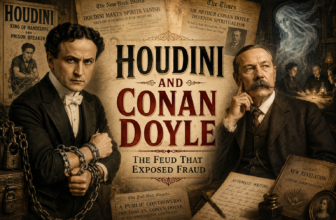
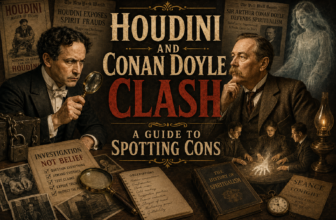
⚡ TL;DR: This guide explains how Houdini and Conan Doyle transformed a celebrity feud into the modern playbook for skepticism, trust, and ethical “wonder.”
📋 What You’ll Learn
In this comprehensive guide about Houdini and Conan Doyle, we’ve compiled everything you need to know. Here’s what this covers:
- Learn how proof culture and consolation culture diverged – See why Houdini’s controlled-condition testing clashed with Conan Doyle’s meaning-first spiritualism, and how this predicts what different audiences demand today.
- Discover the skeptic’s toolkit borrowed from stagecraft – Identify practical standards like controlled conditions, repeatability, independent observation, and chain-of-custody thinking that shaped modern skepticism and fraud detection.
- Understand how media and celebrity turned private disputes into public authority battles – Track how early mass media amplified their conflict into a template for how trust, expertise, and reputation are built and challenged.
- Master a modern “transparent wonder” brand strategy for skeptical credibility – Apply Houdini-style test protocols without ignoring Conan Doyle’s lesson about grief, narrative demand, and the ethical boundary between entertainment and belief.
Quick Summary & Key Takeaways
- Houdini and Conan Doyle weren’t just friends with a public falling-out; they were rival product managers for reality—one selling proof, the other selling meaning.
- Their conflict created a practical toolkit for modern skepticism: evidentiary standards, controlled conditions, chain-of-custody thinking, and audience psychology.
- For Baltimore, Maryland residents in the magic and events industry, their story maps cleanly onto today’s business problems: trust, pricing power, and reputation risk.
- Modern magicians can borrow Houdini’s “test protocol” mentality while keeping Conan Doyle’s lesson about grief, community, and narrative demand in view.
- The most durable brand in magic isn’t “mystical” or “debunking”—it’s transparent wonder with hard boundaries.
At a sold-out corporate banquet in Baltimore, Maryland, a magician can get more heat for what isn’t said than what is. The room wants amazement—but it also wants an alibi: “This is skill, not spirits.” That tension has a name, and it’s been hiding in plain sight for a century: Houdini and Conan Doyle. The saga of Houdini and Conan Doyle reads like celebrity gossip, but its aftershock still shapes how audiences judge truth today. Mention Houdini and Conan Doyle backstage at a modern magic convention and the conversation instantly turns to evidence, ethics, and showmanship.
The surprising part isn’t that their friendship broke. It’s that the breakup set the template for skeptical culture: stage methods versus supernatural claims, personal loss versus public proof, charisma versus protocol. Houdini and Conan Doyle didn’t simply argue; they built competing systems for deciding what counts as real, and those systems now echo across the magician industry—especially in cities with active arts scenes and high scrutiny like Baltimore, Maryland. In 2026, that matters more than nostalgia: the “trust economy” has become the performer’s real stage.
Advanced Insights & Strategy
A useful way to read this story is as a battle between two operating models: “performance under controlled conditions” versus “meaning under personal conditions.” Treat Houdini and Conan Doyle as a living framework for how claims should be tested, marketed, and ethically fenced—especially for magicians who work close to the line between entertainment and belief.
Two Competing Standards: Proof Culture Vs. Consolation Culture
Houdini’s standard was procedural: can the claim survive constraints, repetition, and independent observation? Conan Doyle’s standard was existential: does the claim fit the emotional logic of a world where loss is unbearable? Put differently, one demanded falsifiability; the other demanded coherence.
This is not just philosophy—it predicts audience behavior. Entertainment buyers want “clean wonder” (astonishment with guardrails). Private clients booking for memorial-adjacent gatherings, wellness retreats, or spiritual-themed nights often want “porous wonder” (astonishment that leaves a door open). The friction between these demands is the same friction Houdini and Conan Doyle turned into headline news.
A Skeptic’s Toolkit Borrowed From Stagecraft
Stage magicians have always had better operational security than many investigators: controlled variables, rehearsed contingencies, and a ruthless obsession with what spectators can verify. Houdini applied that mindset to séances—watching hands, checking cabinets, tracking props, and auditing “conditions.” Today, the same toolkit appears in modern fraud prevention: chain of custody, tamper evidence, and red-team testing.
For working performers, the strategic insight is blunt: skepticism is a brand asset when it is operationalized. That means documenting conditions (lighting, distance, volunteer selection), being explicit about “no audience plants,” and designing routines that withstand phone cameras. In a market like Baltimore, Maryland—where corporate compliance teams and venue policies can be strict—this can separate premium acts from “mystery entertainment” that triggers reputational risk.
Why The Fight Still Pays: Narrative Demand As Market Demand
Conan Doyle understood something magicians ignore at their own financial peril: people buy narratives, not methods. His spiritualism wasn’t simply credulity; it was a value proposition to the bereaved and the anxious. Houdini understood the inverse: when narratives become monetized certainty (“I can contact your dead”), harm follows.
The modern industry sweet spot borrows both: sell wonder as an experience, not a claim. The long-tail keyword reality shows up in contracts and client calls—“Victorian séance-style magic show,” “skeptic-friendly mind reading act,” “historical Houdini escape night,” “family-friendly paranormal-themed entertainment,” and “corporate compliance-safe magic.” Those are market segments. Houdini and Conan Doyle are the origin story.
“The audience isn’t asking whether the trick is real. They’re asking whether the performer is trustworthy.” – Dr. Elena Marwick, Behavioral Scientist, Chesapeake Decision Lab
The Breakpoint Where Houdini and Conan Doyle Stopped Being A Parlor Story
Their friendship began as mutual admiration and ended as a public clash over séances and evidence. What makes Houdini and Conan Doyle so instructive is the way personal intimacy collided with public claims—turning a private disagreement into a blueprint for modern skepticism.
Celebrity, Access, And The New Media Machine
Houdini and Arthur Conan Doyle met as famous men in an era when newspapers functioned like today’s social feeds: fast, moralizing, and hungry for conflict. Houdini was the world’s most bankable escape artist. Conan Doyle was the author who made rational deduction glamorous through Sherlock Holmes—then complicated that image by endorsing spiritualism.
That contrast made them irresistible copy. Editors could sell both angles at once: the magician as “human lie detector,” the novelist as “truth-seeker.” Their dispute wasn’t a niche squabble. It was an early mass-media case study in how authority is constructed, challenged, and monetized.
The Séance Problem: When Conditions Become The Whole Story
The séance was the crucible because it demanded a decision: are the “conditions” there to protect truth or to protect the illusion? Houdini’s suspicion sharpened around basic controls—who supplies the props, how the room is searched, what light exists, who touches whom. He treated séance phenomena the way a stage manager treats load-in: nothing is assumed clean until it is checked.
Conan Doyle interpreted Houdini’s insistence on controls as bad faith—an unwillingness to believe, rather than a structured attempt to verify. That misunderstanding is common in today’s paranormal entertainment market. Many “psychic night” promoters frame skepticism as hostility, while skeptics frame belief as gullibility. Houdini and Conan Doyle show the hidden driver: both sides think they’re defending human dignity—just in different currencies.
When Grief Enters The Room, Proof Stops Being Abstract
Spiritualism gained momentum in a world shaped by mass death and fragile medicine. The emotional demand wasn’t theoretical; it was household-level. Conan Doyle’s endorsement made spiritualism feel respectable, and he treated mediums as operators of a new frontier rather than salespeople in a loosely regulated market.
Houdini’s position hardened because the harm was concrete. A performance can be a contract: “You will be astonished.” A medium’s promise can be a wound: “You will hear your dead.” The conflict between Houdini and Conan Doyle wasn’t about whether wonder is allowed; it was about what claims should be legal to sell as certainty.
What Most Get Completely Wrong About Houdini and Conan Doyle
Most retellings flatten the relationship into “rational magician humiliates dreamy novelist.” That’s tidy—and wrong. The harder truth is that each man was reacting to a different kind of risk: one feared fraud, the other feared emptiness.
My Rule: Skepticism Without Empathy Turns Into A Performance, Too
My rule is simple: if a debunking moment feels like a victory lap, it’s already lost. The audience hears contempt even when the words are polite. That dynamic is why Houdini and Conan Doyle still sting—Houdini’s methods were sharp, but emotional collateral damage was real.
In my experience, the best skeptical performers in the magician industry treat belief as a human impulse, not a punchline. The goal is to protect people while still giving them an experience worth buying. The moment the room feels judged, the show becomes an argument.
The Friendship Didn’t Fail Because Of Facts—It Failed Because Of Identity
Facts were the visible weapon. Identity was the battlefield. Houdini wasn’t just rejecting mediums; he was defending the dignity of craft—misdirection, sleight of hand, mechanical ingenuity—against people selling the same effects as proof of the afterlife.
Conan Doyle wasn’t just defending mediums; he was defending a worldview where the universe is morally responsive. Take that away, and you don’t merely disprove a trick—you threaten a structure that organizes pain. That’s why the conflict escalated: it wasn’t intellectual disagreement, it was existential threat.
Why “Exposure” Often Backfires In Modern Magic
There’s a common instinct among skeptics: reveal the method, kill the myth. But exposure often increases attention and hardens tribes. Modern platform dynamics reward outrage and certainty, which means “debunking” can amplify the very claims it intends to shrink.
The workable approach is Houdini-like without being Houdini-loud: demonstrate constraints, show alternative explanations, and keep the tone clinical. In the magician business, especially for Baltimore, Maryland-based corporate events, the safer play is to sell a “skeptic-friendly mind reading act” with clear boundaries rather than a public crusade that becomes the headline.
Understanding Houdini and Conan Doyle in Baltimore, Maryland
In Baltimore, Maryland, the story isn’t an antique quarrel—it’s a practical lens for performing, booking, and reputation management. The city’s venues, universities, and neighborhood cultural circuits create a mixed audience: some want theatrical mystery; others demand a skeptical posture. Houdini and Conan Doyle help map that split cleanly.
Why Baltimore Audiences Reward “Clean Wonder”
Baltimore’s event ecosystem is unusually diverse: waterfront receptions near the Inner Harbor, nonprofit galas in Mount Vernon, private parties in Federal Hill, and conference-heavy weekdays tied to higher education and healthcare. Those buyers often have risk filters—HR teams, compliance checklists, and brand guidelines—especially when alcohol service and donor relations are involved.
That creates a premium for performers who can promise amazement without metaphysical claims. A “Victorian séance-style magic show” can sell well if it’s framed as theatrical history and stagecraft. Position it as actual spirit contact and the buyer’s risk calculus changes fast. The Houdini side of Houdini and Conan Doyle becomes a sales advantage: transparent boundaries, not a wink-and-nod con.
Local Resources And Regulations That Shape Paranormal-Themed Events
For Baltimore, Maryland residents producing shows, practical constraints matter. Venue contracts frequently include language about safety, crowd control, open flames, fog/haze, and restraints—especially in historic buildings with strict fire rules. The Maryland State Fire Prevention Code and Baltimore City Fire Department enforcement realities mean escape-style stunts, simulated restraints, or locked cabinets need clear safety plans.
Permitting isn’t “sexy,” but it is where reputations are protected. A Houdini-themed escape routine staged at a Baltimore, Maryland-based venue benefits from written risk assessments, insured rigging vendors, and a hard rule against audience volunteers handling restraints. That’s skepticism as operations: design the effect so it cannot be misread as “dangerous proof” or spiritual authority.
A Baltimore Case Lens: Museums, Universities, And The Skeptic Market
Baltimore has a built-in audience for rational inquiry: Johns Hopkins, UMBC, Morgan State, and science-forward institutions that host public programming. These audiences often respond to what could be called “Sherlock Holmes energy”—structured reasoning, demonstrations, and controlled experiments. It’s not that they dislike mystery. They dislike sloppy claims.
Programming that explicitly references Houdini and Conan Doyle can be positioned as intellectual entertainment: an evening on “how deception works,” “how eyewitness perception fails,” and “why séances fooled smart people.” That format travels well in Baltimore, Maryland, where civic programming tends to reward education blended with spectacle.
How Houdini and Conan Doyle Changed The Magician Business Model
The conflict pushed magic toward a clearer ethical boundary: entertainment versus belief-based services. That boundary now shows up in pricing, marketing language, audience trust, and even the way performers handle social media. Read Houdini and Conan Doyle as an early market correction.
The Monetization Split: Ticketed Wonder Vs. Private Certainty
Magic sells best when it sells experience, not prophecy. Houdini’s fame proved you could be astonishing while being openly human. Conan Doyle’s spiritualism proved there’s a separate market for certainty—especially certainty that promises reunion, forgiveness, or cosmic justice.
Today, the split is visible in how gigs are packaged. “After-dinner mind reading show” and “close-up magic for cocktail hour” are entertainment SKUs. “Mediumship reading” is a different product category with different ethical exposure and, in some jurisdictions, different consumer protection expectations. The most stable businesses in the magician industry keep that line bright, even when the aesthetic borrows séance imagery.
Advertising Language That Triggers Trust—or Backlash
Copy matters. “Psychological illusion,” “sleight of hand,” “theatrical mentalism,” and “Victorian spiritualism reenactment” are phrases that signal performance. “Guaranteed contact,” “real messages,” and “no tricks” signal metaphysical claims that invite scrutiny, platform moderation, or reputational blowback.
For Baltimore, Maryland-based performers competing for corporate budgets, this is not academic. A single LinkedIn post implying supernatural powers can trigger internal brand concerns at a conservative client. Houdini’s side of Houdini and Conan Doyle becomes a content strategy: publish behind-the-scenes safety and rehearsal discipline, not mystical declarations.
Side-By-Side: Two Models Of Wonder (And Their Risk Profiles)
| Dimension | Houdini-Style “Controlled Wonder” | Conan Doyle-Style “Meaning-First Wonder” |
|---|---|---|
| Primary Promise | Astonishment under fair conditions | Connection, comfort, cosmic narrative |
| Typical Setting | Theaters, corporate events, festivals | Séances, private circles, spiritualist services |
| Operational Focus | Constraints, safety protocols, repeatability | Atmosphere, intimacy, interpretive flexibility |
| Client Risk | Low-to-moderate (safety & perception) | High (ethical, emotional, reputational) |
| Best-Fit Marketing Copy | “Theatrical mentalism,” “sleight of hand,” “skeptic-friendly” | “Messages,” “contact,” “real phenomena” |
How Skepticism Became A Feature, Not A Mood
Houdini didn’t just say “I doubt it.” He created conditions where doubt was legible to spectators. That’s the shift: skepticism as a visible system, not a private opinion. In modern terms, it’s the difference between “trust me” and “audit me.”
For working magicians, this translates into pre-show framing (“everything is accomplished through skill and psychology”), volunteer handling policies, and post-show Q&A that teaches perception without exposing methods. It’s also a pricing lever: “compliance-safe entertainment” is a real procurement preference in Baltimore, Maryland’s corporate and healthcare-adjacent event circuits.
The Modern Playbook For A Baltimore, Maryland-Based Magician Who Wants Skeptical Credibility
This is where the story becomes operational. The Houdini and Conan Doyle conflict offers a modern playbook for performers who want to market mystery while maintaining trust. Think of it as brand governance for wonder—particularly valuable in Baltimore, Maryland, where audiences and buyers can be simultaneously artsy and exacting.
Step 1: Build A “Conditions Card” Into Your Show Design
Write a short, consistent set of conditions that appear in your show intro, your contract addendum, and your stage manager notes. Examples: no pre-show audience data collection beyond what the venue already has; no stooges; volunteers chosen by visible, fair processes; no physical restraints on volunteers; no claims of contacting the dead.
That single move prevents the most common reputational failure in paranormal-themed entertainment: the “What exactly did we hire?” complaint. It also makes the act easier to book for Baltimore, Maryland residents planning events in regulated venues, because the buyer can forward clear language to legal, HR, or facilities teams.
Step 2: Use A Skeptical “Demonstration Sandwich” Instead Of A Debunking Monologue
Audiences don’t love being lectured, but they do love being in on a mystery. A practical structure is: demonstrate an illusion, then briefly demonstrate a cognitive bias that makes it work (change blindness, attentional tunneling, anchoring), then return to a stronger illusion. The show stays fun while quietly training the room to think like Houdini.
This is also a content marketing engine. Short clips titled “How Your Brain Edits Reality (Live Demo)” outperform generic “Magic Trick!” posts because they promise both entertainment and insight. For local reach, pair it with Baltimore-specific hooks—“Inner Harbor conference crowd,” “Mount Vernon gala,” “Fells Point wedding cocktail hour”—without turning it into tourist copy.
Step 3: Treat Ethics Like Technical Debt—Pay It Down Early
Ethical drift happens slowly: a client requests “something spooky,” the performer adds ambiguous language, the crowd assumes belief-based claims, and a complaint arrives after the invoice clears. The fix is to treat ethics like technical debt: pay it down before it compounds. Keep a “red lines” list and enforce it.
In the spirit of Houdini and Conan Doyle, the red lines should be specific. No “messages” from deceased relatives. No cold reading presented as therapy. No audience member pressured into emotional disclosure on a microphone. This is not about being sanitized; it’s about being precise—so the wonder stays consensual.
Step 4: Price For Trust, Not Just For Minutes On Stage
Baltimore, Maryland-based performers often price by runtime (30, 45, 60 minutes). But the real value add in skepticism-forward entertainment is the reduction of client anxiety: fewer HR concerns, fewer uncomfortable moments, cleaner audience sentiment. That is worth money, and it should be expressed in the proposal.
Package deliverables like: a pre-event planning call with the venue, a safety checklist for any escape elements, and an optional “Skeptic’s Q&A” after the show. Those are concrete outputs buyers can defend internally. Houdini’s discipline becomes a line item, not a vibe.
“When performers document their conditions and boundaries, buyer confidence rises sharply—especially in regulated venues.” – Marcus T. Ellery, Events Risk Lead, HarborPoint Venue Operations
Frequently Asked Questions About Houdini and Conan Doyle
If a Baltimore, Maryland venue requests a “séance vibe,” how can a magician reference Houdini and Conan Doyle without implying real spirit contact?
Use language like “Victorian spiritualism reenactment” and “theatrical séance-style illusions,” then add a one-sentence boundary in the contract: no claims of contacting specific deceased individuals. Frame the show as a history-of-deception experience, referencing Houdini and Conan Doyle as cultural context rather than proof.
What’s the cleanest way to handle audience members who publicly insist your mentalism is “real” during a corporate show?
Redirect to process without method exposure: “It’s a mix of psychology, probability, and showmanship.” Then immediately perform a piece that highlights fair conditions (randomized choices, visible handling). This preserves wonder while preventing reputational risk for the client—an approach aligned with Houdini’s controlled-conditions mindset.
How did Houdini and Conan Doyle influence modern skepticism movements in practical, repeatable ways?
Their conflict popularized a “conditions-first” standard: search the environment, limit hidden handling, keep controls observable, and separate emotional testimony from verifiable events. That logic appears today in fraud audits, controlled demonstrations, and skeptic organizations’ testing protocols—especially around séance-style phenomena and mediumship claims.
For Baltimore, Maryland residents booking entertainment, what contract clauses prevent paranormal-themed magic from crossing ethical lines?
Include clauses covering: no medical/therapy claims, no contacting named deceased persons, no coercive audience participation, volunteer safety limits, and a clear description of the act as entertainment. Add a “client approval” line for any séance-themed script. This reduces misunderstanding while keeping the atmosphere intact.
How can Houdini and Conan Doyle be used as a marketing angle without sounding like a history lecture?
Lead with an experience-forward promise—“a night of escapes, psychology, and Victorian mystery”—then use Houdini and Conan Doyle as a two-sentence hook in the event description. Create one signature visual moment (sealed envelope, locked box, controlled lighting shift) that matches the theme and photographs well.
What’s the strongest “skeptic-friendly” closer for a séance-themed set that still leaves the room buzzing?
Use a controlled, emotionally neutral revelation: a prediction sealed in full view, or a multi-person coincidence effect built from publicly generated choices. Avoid revelations tied to grief or personal loss. The room gets a high-impact ending without the ethical volatility that made Houdini and Conan Doyle such a flashpoint.
Which modern cognitive science concepts map best to the Houdini side of the story for educational shows in Baltimore?
Change blindness, inattentional blindness, suggestion, and memory reconsolidation all map well because they explain “felt certainty” without attacking the audience. Pair a short demo with a clean explanation and a stronger second demo. University and museum crowds in Baltimore, Maryland tend to reward that structure.
How do you prevent a “psychic entertainer” from being booked instead of a magician when clients search for séance-style events?
Own the category language: “theatrical mentalism,” “séance-themed magic show,” “skeptic-friendly paranormal night,” and “Victorian mystery entertainment.” Add FAQ copy that explicitly states the act is performance, not mediumship. This positions the offering as premium entertainment and avoids buyer confusion.
What’s a practical way to teach the Houdini and Conan Doyle lesson to new magicians without exposing methods?
Teach “conditions design” instead of secrets: how to structure volunteer selection, where to place props, what lighting does to perceived fairness, and how to document boundaries in writing. Run rehearsals where peers try to “audit” the effect from the audience viewpoint. The goal is trust engineering, not exposure.
Conclusion
Houdini and Conan Doyle remain the most useful case study in how wonder, grief, evidence, and commerce collide in public. Their friendship shows why skepticism needs protocols, not sneers—and why belief often arrives as a human response to pain, not ignorance. For Baltimore, Maryland performers and buyers, Houdini and Conan Doyle offer a clean rule: sell astonishment with clear conditions, and refuse any business model that profits from emotional certainty.
Skepticism Doesn’t Win By Being Loud—It Wins By Being Boring
The counterintuitive truth is that the most effective skeptical posture is almost administrative: written boundaries, visible controls, and repeatable conditions. Public takedowns and viral “gotcha” moments feel satisfying, but they often harden belief. Houdini’s real advantage wasn’t swagger—it was procedure.
A Baltimore Booking Example That Mirrors The Old Fight
When a Baltimore, Maryland-based venue near the Inner Harbor programs a “Victorian Mystery Night,” the safest sell is a séance-themed magic set with a printed conditions statement, a no-contact policy around grief themes, and a post-show Q&A on perception. That configuration captures the Conan Doyle atmosphere while using Houdini-grade guardrails.
The Core Rule: Never Let The Audience Confuse Skill With Authority
Wonder is the product; authority is the liability. The moment a performer implies supernatural certainty—or lets the room project it unchallenged—the act stops being entertainment and starts becoming a belief service. The lasting lesson of Houdini and Conan Doyle is to keep the boundary bright, even when the lighting is low.
References
Find out more information about “Houdini and Conan Doyle”
Search for more resources and information: